
Not all materials age well in Oregon.
Some crack after a few freeze-thaw cycles. Others grow moss within a season. And a few look beautiful in a showroom but turn into maintenance nightmares once installed.
The right materials do more than look good on day one. They hold up to rain, resist moss, drain properly, and age with character instead of falling apart.
Here's what to consider when choosing materials for a landscape that lasts.
Why Material Choices Matter More in the PNW
The Pacific Northwest has a specific climate. Wet winters. Temperature swings. Moss. Heavy foot traffic on damp surfaces.
Materials that work in drier climates don't always perform here. Some pavers trap water. Certain woods rot quickly. And not all stone weathers the same way.
When you choose materials designed for this region, you avoid costly replacements and constant maintenance.
Hardscape Surfaces: Pavers, Stone, and Concrete
Your patio, walkway, or driveway surface takes the most abuse. It needs to drain well, resist cracking, and remain stable through wet winters.
Concrete Pavers
Pavers are one of the most reliable choices for the PNW. They drain well, resist cracking, and come in a wide range of styles. If one gets damaged, it can be replaced without tearing up the entire surface.
Quality pavers also resist moss better than porous materials, though no hardscape is entirely immune.
Natural Stone
Stone adds texture and character. Flagstone, bluestone, and basalt all work well in Oregon landscapes. Natural stone weathers beautifully and feels timeless.
The tradeoff is cost. Stone is more expensive than pavers and requires skilled installation to ensure proper drainage and stability.
Poured Concrete
Concrete can work, but only when installed correctly. Poor drainage or weak base prep leads to cracks. Finished concrete with integral color or texture holds up better than bare gray slabs.
Concrete works best for driveways or large patios where seams would be impractical.
Retaining Walls: Engineered Blocks vs. Natural Stone

Retaining walls need to manage water pressure, resist shifting, and look intentional.
Engineered Wall Blocks
Wall blocks are designed for structural performance. They lock together, drain properly, and handle slopes reliably. Modern blocks come in finishes that mimic natural stone without the cost or installation challenges.
Natural Stone Walls
Stacked stone walls offer unmatched character. They work beautifully in high-end landscapes where aesthetics are a priority. However, they require skilled masons and proper drainage to prevent failure.
Both options work. The choice depends on budget, aesthetics, and site conditions.
Fire Features: Built-In vs. Prefab

Fire features extend your outdoor season and create a natural gathering point. Material choice affects both performance and longevity.
Built-In Fire Pits
Custom fire pits made of stone, concrete blocks, or poured concrete offer the greatest design flexibility. They can match your patio materials and integrate seamlessly into the overall design.
These require proper drainage underneath and heat-resistant materials on the interior. When built correctly, they last for decades.
Prefab Fire Bowls and Tables
High-quality steel or cast-concrete fire bowls work well in smaller spaces or as accent features. Look for powder-coated steel or sealed concrete that resists rust and weathering.
Avoid cheap fire pits that rust out after a season or two. Quality fire features are worth the investment.
Gas vs. Wood-Burning
Gas fire features offer convenience and consistent heat. Wood-burning options create ambiance but require more maintenance and cleaning. Both work in the PNW when designed with proper ventilation and drainage.
Gravel and Mulch: Functional, Not Filler
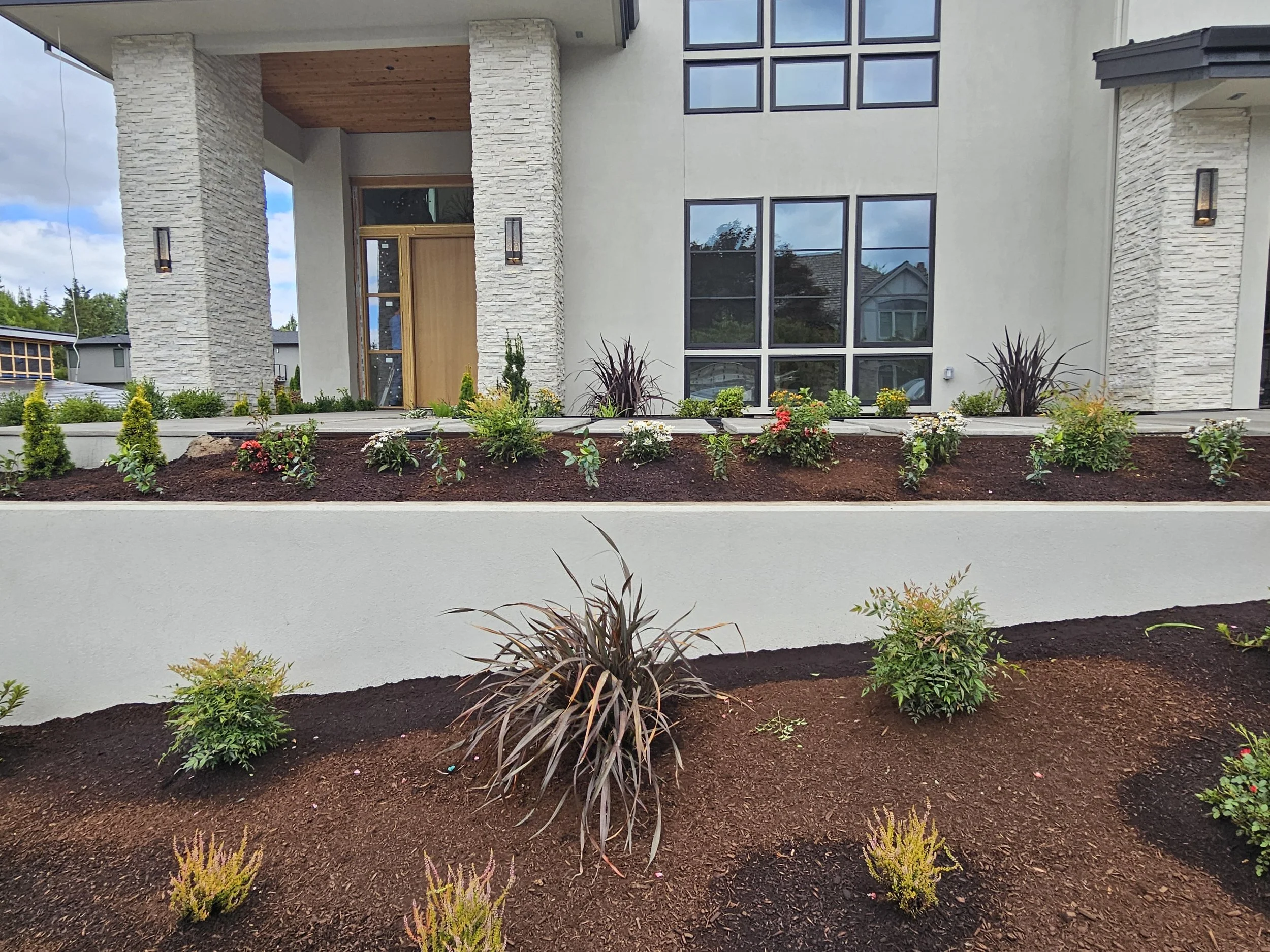
Gravel and mulch aren't just budget fillers. They serve fundamental functions when used correctly.
Crushed Gravel
Crushed gravel (often called ¾-minus) compacts well and works for pathways, dry creek beds, and utility areas. It drains effectively and holds up better than round pea gravel.
Bark Mulch
Bark mulch works for planting beds. It suppresses weeds, retains moisture, and slowly breaks down. In the PNW, medium-sized bark chips perform better than fine mulch, which compacts and grows moss.
Decorative Rock
River rock and larger decorative stones work well as accents or in drainage features. They don't decompose and require little maintenance.
The Base Matters More Than the Surface
Beautiful materials fail when the base isn't done right.
A proper base includes compacted gravel, drainage considerations, and attention to slope. Skipping this step leads to settling, cracking, and water pooling.
This is where many homeowners regret trying to save money. A strong base costs more upfront but prevents expensive repairs later.
Choose Materials That Age Well
The best landscapes improve with age. Stone develops patina. Quality pavers stay level and functional. Fire features become the heart of the outdoor space.
Cheap materials do the opposite. They crack, shift, stain, and require constant attention.
When you invest in the right materials from the start, your yard becomes easier to maintain and more enjoyable to use.
Build It Once
Material choices shape how your landscape performs for years to come. The goal isn't to pick the most expensive option. It's to choose materials that fit the Pacific Northwest climate and match how you plan to use the space.
At Summit Landscape, we help homeowners select materials that balance aesthetics, durability, and budget. We consider drainage, site conditions, and long-term performance so your yard holds up season after season.
If you're planning a landscape project and want guidance on material choices that actually matter, let's talk.